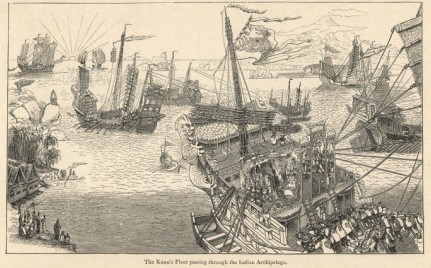
A shipwreck from a failed Mongolian invasion of Japan in the 13th century has been discovered by archaeologists working at the underwater Takashima Kozaki site.
Researchers from the University of the Ryukyus and the Matsuura city board of education said it was the second shipwreck from the invasion ordered by Kublai Khan. Three other potential wrecks have also been found but are yet to be confirmed, archaeology professor Yoshifumi Ikeda told the Asahi Shimbun.
The first Mongolian warship wreck was found in 2011. Both ships date to invasions that took place in in 1274 and 1281, when fleets of over 4,000 ships were sent by the emperor of the Yuan Dynasty to conquer Japan. On both occasions, the armadas were destroyed by typhoons – called kamikazes – which saved the country from invasion.
The latest shipwreck was identified by its structure and ceramic artefacts found nearby. The remaining wreck measured 12m long and 3m wide, but researchers estimate it would have been around 20m from bow to stern and up to 7m wide.
"We have successfully confirmed the two ships from the Mongolian invasion, and further research on them is expected to lead to the discovery of even more sunken Mongolian ships," Ikeda said.
It was found around a 1.7km from the first confirmed wreck, around 200m off the southern coast of Takashima island. Experts believe those on board had been trying to take shelter from the storm in the bay where it was found when it sank.
Atsuyuki Nakata, the head of the cultural properties division of the Matsuura city board of education, told The Telegraph they expect to learn a great deal from the wrecks: "One thing that we hope to learn from the wreck is the kind of materials that were used by the Mongolians 730 years ago, as well as the techniques used in the construction of the ship.
From http://www.ibtimes.co.uk/mongolian-shipwreck-kublai-khans-13th-century-invasion-japan-discovered-by-archaeologists-1509319
Sunday, July 5, 2015
Friday, June 19, 2015
Happy Summer!
As I reflect on my year here at FCCS I can only think of happy and fun memories with your students. Thank you for sharing them with me this year. My heart is fuller and richer from all of the interactions this year. I appreciate your student's hard work, happy smiles, and of course your all's commitment to them receiving an excellent education. I hope you all have a happy, safe, and enlightening summer. I already miss the kiddos. For those returning to me next year, I am so excited to have another year with them. I work on improving myself / my knowledge / my teaching so, they'll be in for an even better round 2 with Mr. K. For those moving on to 7th, I am proud of the two years they spent with me; hopefully that is worth a few bonus high fives in the hall ways. Lastly, for those departing FCCS, I will miss you all dearly. I wish there is something I could do in my power to make it work for you all, but I still thank you for all you have contributed to the community during your stay here.
Of course, I'd love to solicit any constructive feedback in order to improve my communication and instruction.
Thank you again, for a wonderful year shared with the kiddos. I am one of the luckiest people in the world with a job that gives me so much back. Have a great summer.
Wednesday, June 17, 2015
Great turn out for the awards ceremony!
I am so proud of the amazing students we have here at FCCS! Thank you for all your support this year.
Monday, June 15, 2015
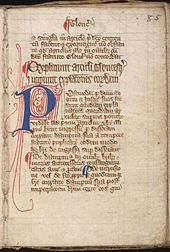
Commemorating 800th anniversary of Magna Carta
The Magna Carta is more relevant now than ever, and formed
the basis of our own Constitution, the Bill of Rights and the Universal
Declaration of Human Rights.
The queen, husband Prince Philip and Prince William were
among the royal family members to make the journey to a place called Runnymede,
a meadow west of London, where the historic document was signed.
The ceremony unveiled new artwork symbolizing one of Magna
Carta's most important clauses: 12 bronze chairs facing each other to signify
the right to a trial by jury.
A replica of the document on board the Royal Barge made its
way down the River Thames to the site over the weekend, leading a flotilla 200
boats.
Foreign Secretary Philip Hammond called it Britain's first
export of intellectual property.
"It inspired the Founding Fathers of the United States.
To this day, the image of Magna Carta is emblazoned on the great doors of the
Supreme Court of the United States," he said.
Four copies of the document survive, two of them held in the
British Library. Earlier this year, Prince Charles visited the National
Archives in Washington D.C. where a later version is on display.
Hastily scribbled on a single page of parchment, Magna
Carta, meaning "great charter" in Latin, was signed by King John by
force in order to subdue angry and powerful barons who were sick of getting
kicked around by the treacherous and unpopular monarch.
Monday's ceremony may be making up for lost time. Magna
Carta has taken on far more significance in the United States than in Britain.
It was, after all, the American Bar Association that dedicated the first
monument in the field in Runnymede, not the English.
The original was hardly a rallying cry for the common man,
though. In fact, it explicitly discriminated against peasants and women. But
later, more enlightened versions helped underpin the American legal system,
specifically that "no person shall be deprived of life, liberty or
property without due process of the law."
Friday, June 12, 2015
Subscribe to:
Posts (Atom)